

Why Your Therapy Website Isn’t Converting
If you’re getting website visitors but not receiving inquiries, you’re probably wondering why your therapy website isn’t converting.
You’ve invested time. You may even be ranking. But bookings aren’t happening.
Here’s the truth: traffic alone does not grow a private practice. Conversion does.
Let’s break down the most common reasons therapist websites fail to convert — and how to fix them.
1. Why Your Therapy Website Isn’t Converting: Unclear Messaging
When someone lands on your homepage, they should immediately know:
- Who you help
- What problems you specialize in
- Where you’re located
- What action to take
If visitors are confused, they leave.
Clarity improves therapist website conversion more than design trends ever will.

2. You’re Talking About Yourself Too Much
Many therapist websites focus heavily on credentials and philosophy.
Credentials matter. But clients are thinking:
“Can you help me?”
Your homepage should speak to their pain before your background.
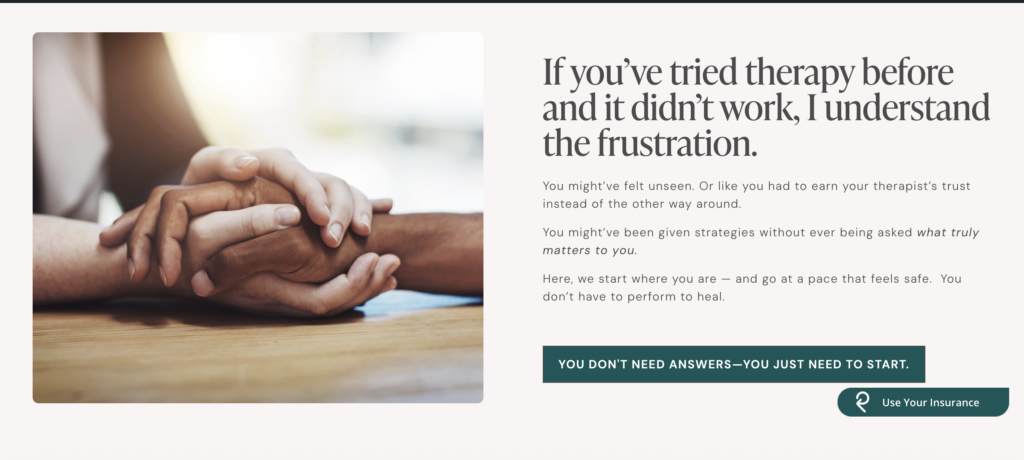
Fix:
Structure your content like this:
- Client pain point
- Your solution
- How it works
- Why trust you
- Clear call to action
That’s conversion-focused therapist website design.
3. Your Website Lacks a Clear Conversion Path
One major reason why your therapy website isn’t converting is the absence of a visible, singular call-to-action.
Common mistakes:
- Multiple competing buttons
- Hidden booking links
- Only a generic contact page
- No CTA above the fold
Fix it by placing a primary action clearly:
👉 Book a Consultation
👉 Schedule a Call

4. Your Website Feels Overwhelming
Too much text.
Too many menu items.
Too many services on one page.
Cluttered layout.
When people feel overwhelmed, they disengage.
Fix:
Simplify:
- Clean navigation
- Clear headings
- Short paragraphs
- Intentional white space
- Focused service pages
A strategic private practice website removes friction.
5. Your Design Doesn’t Build Trust Fast Enough
Online, trust must happen in seconds.
Trust signals include:
- Professional design
- Clear specialty positioning
- Testimonials (if appropriate)
- Consistent branding
- Local relevance
If your site looks outdated or DIY, it affects perceived credibility.
That’s why strategic website design for therapists matters.
6. You’re Getting the Wrong Traffic
Sometimes the issue isn’t conversion.
It’s targeting.
If your SEO attracts broad traffic but not your ideal client, conversions stay low.
Fix:
Refine your SEO strategy:
- Use city-specific keywords
- Target specific specialties
- Create individual service pages
- Optimize your Google Business Profile
For deeper optimization guidance, read:
👉 Therapist Website SEO Checklist
Sometimes the issue isn’t design.
It’s SEO targeting.
If your content is too broad, you may rank — but not for clients ready to book.
Refining local SEO and specialty-based keywords can dramatically improve therapist website conversion.
For official best practices on optimizing your business profile, review Google’s guidelines:
https://support.google.com/business/
7. Your Website Isn’t Mobile Optimized
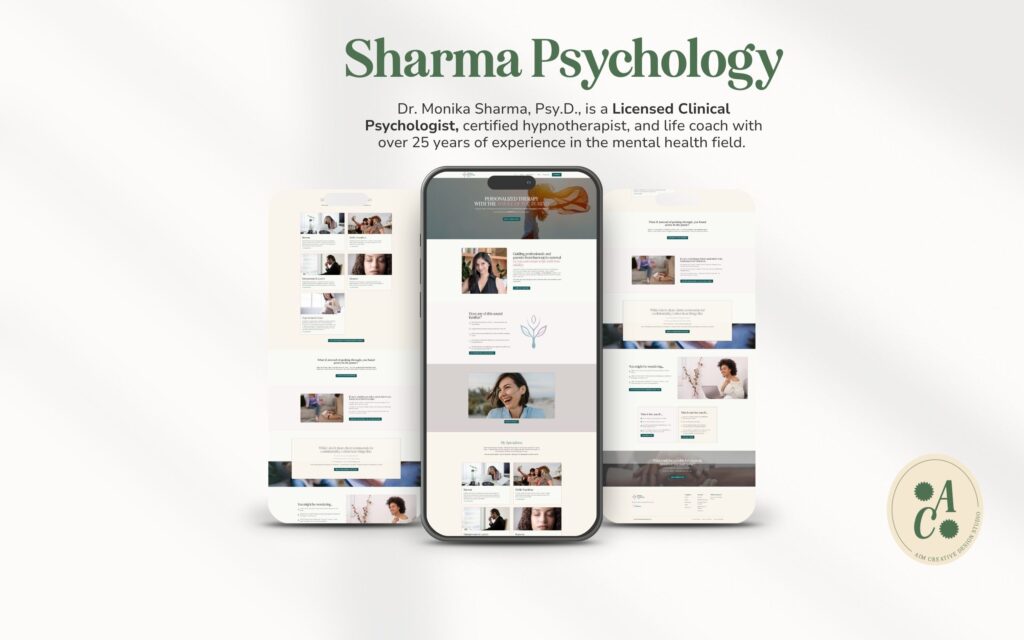
More than half of therapy searches happen on mobile devices.
If your site:
- Loads slowly
- Has tiny buttons
- Requires zooming
- Has hard-to-fill forms
Visitors leave.
Mobile experience directly affects why your therapy website isn’t converting.
Conversion Is Strategy, Not Luck
If your therapy website isn’t converting, it’s not random.
It’s structure.
It’s clarity.
It’s positioning.
It’s design.
It’s SEO alignment.
When all of those work together, your website becomes a consistent client acquisition tool — not just an online brochure.
FAQs
How do I know if my therapy website has a conversion problem?
If you’re getting traffic but few inquiries, unclear messaging, poor calls-to-action, or design issues may be preventing conversions.
What is a good conversion rate for a therapist website?
Conversion rates vary, but 2–5% is common for well-optimized private practice websites.
Can SEO help increase conversions?
Yes. The right SEO strategy attracts aligned visitors who are more likely to book.
Final Thoughts
You don’t need more traffic.
You need better alignment between your messaging, SEO, and design.
If you’re ready to turn your private practice website into a high-performing client acquisition system, let’s build it strategically.
